Next.js Development Services — Full-Stack React Applications
Static Website Design Services - HTML, CSS & JavaScript
Portfolio CMS Development - Custom Admin Dashboard & Self-Managed Portfolio
WordPress Development Services - Custom Themes, Plugins & Headless WP
MERN Stack Development Services - MongoDB, Express, React & Node.js
Salon & Spa Website Development — Online Booking, Staff Scheduling & POS
SEO Optimization Services - Technical SEO, Core Web Vitals & Schema Markup
SaaS Platform Development — Multi-Tenant Architecture, Stripe Billing & Dashboards
Real Estate Website Development — Property Listings, IDX & Agent Portals
Figma to Next.js & React Conversion - Pixel-Perfect, Responsive Code
Café & Coffee Shop Website Design — Menu, Online Orders & Loyalty System
Figma to Next.js / React
Custom API Integration Services — Stripe, OpenAI, Twilio & Third-Party APIs
Hotel Website Development — Booking Engine, Room Management & Channel Manager
Law Firm Website Development — Lead Generation, Practice Area SEO & Client Portal
Maintenance & Bug Fixing
Dental & Healthcare Clinic Website Development — Appointment Booking & Patient Portal
Restaurant Website Development — Online Ordering, Menu & Table Reservations
HarshPatel
Navigation
Projects
My work & builds
Courses
Interactive learning
Blog
Thoughts & tutorials
Services
What I offer
Contact
Let's work together
// Writing
Thoughts on web development, tutorials, and the occasional deep-dive into tech topics.
Anthropic built Claude Mythos — an AI that found 271 Firefox vulnerabilities and hacked a simulated corporate network. Then they locked it away. Here's what it can do, why normal users can't access it, and what India is doing about being left out.
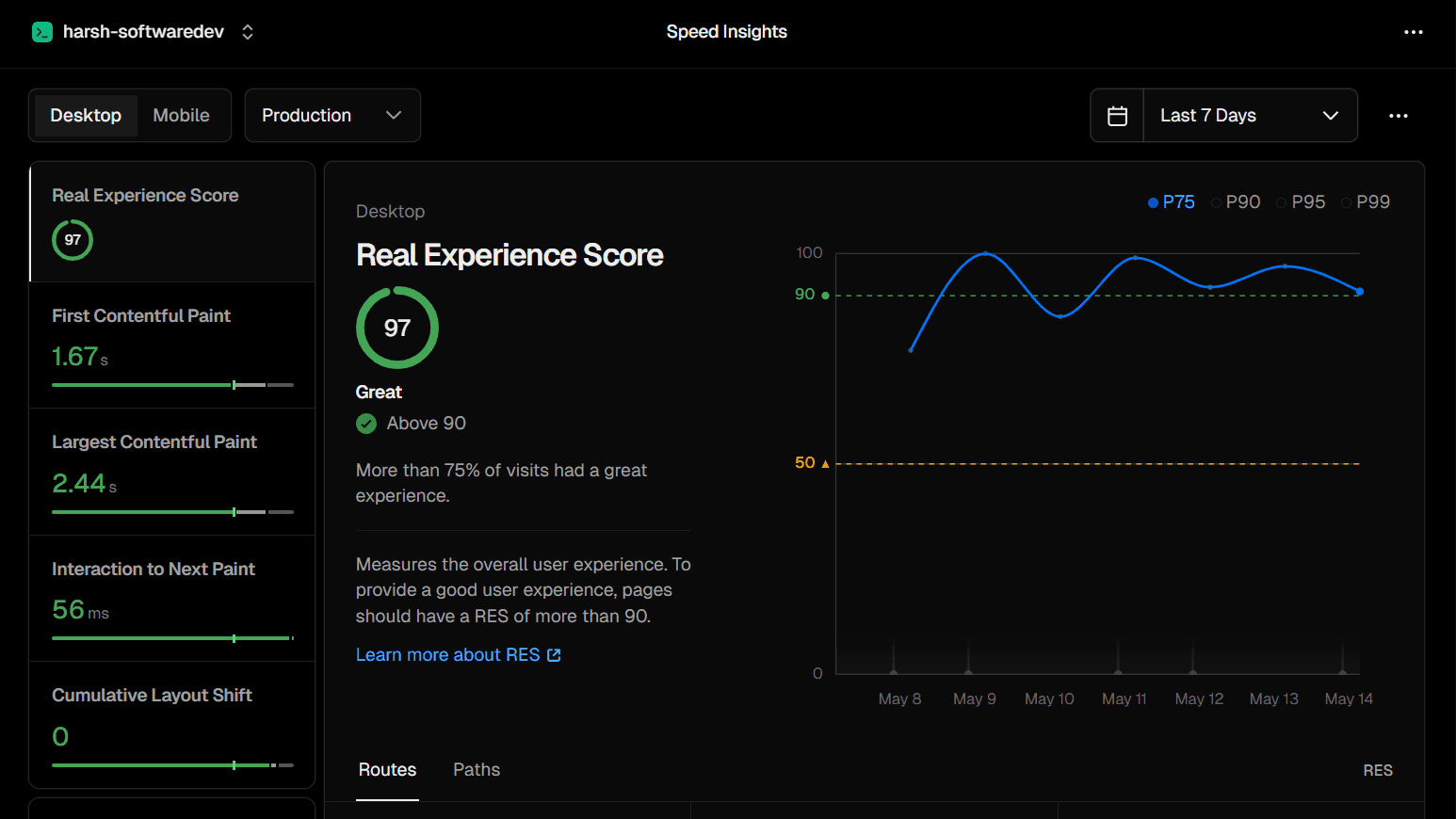
Vercel Speed Insights gave my Next.js portfolio a Real Experience Score of 97 — FCP 1.67s, LCP 2.44s, INP 56ms, CLS 0. Here's what each metric means, why it matters for SEO, and exactly how I achieved these scores.
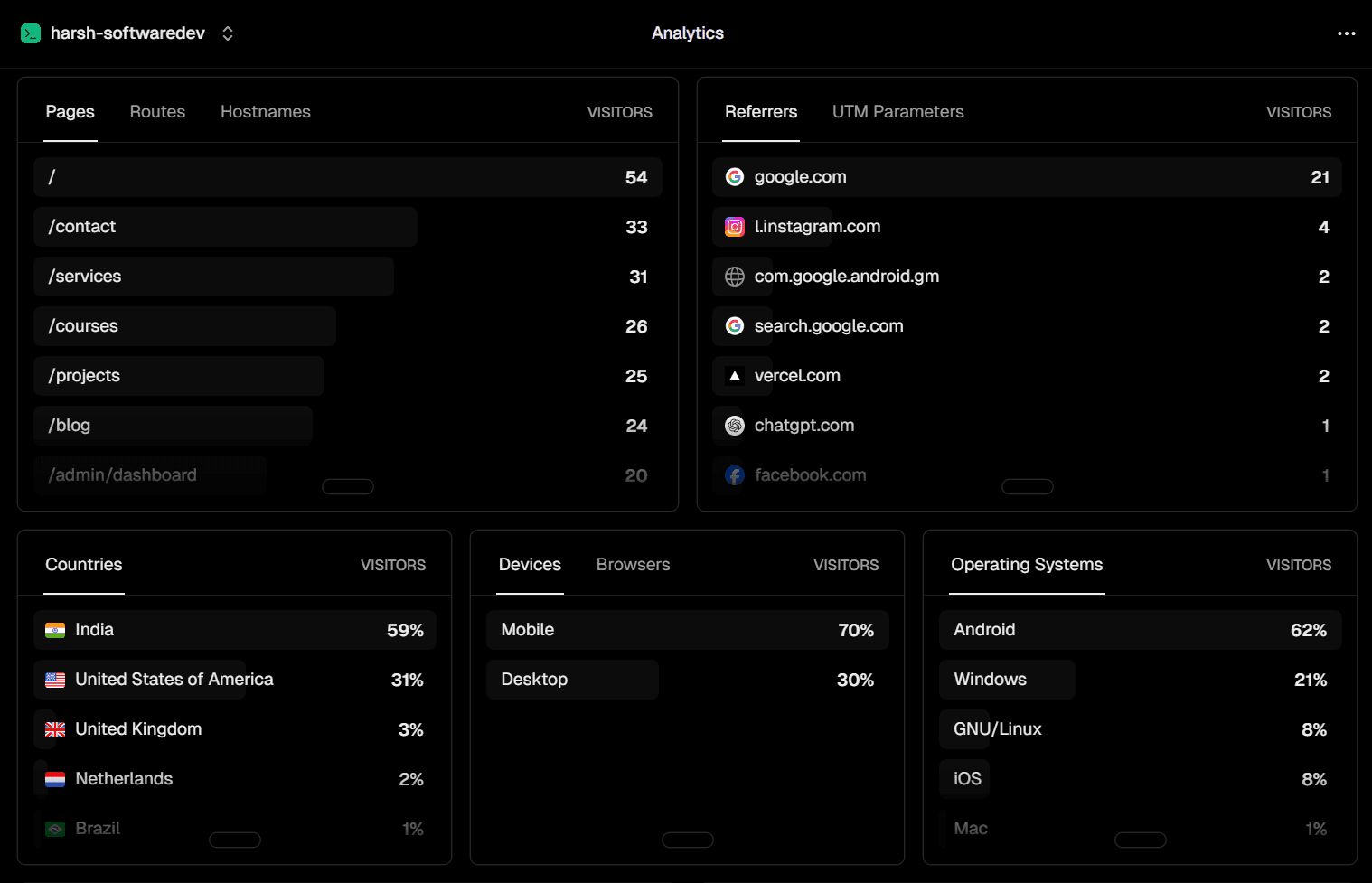
I dug into my Vercel Analytics dashboard and found something surprising - 70% mobile visitors, 59% from India, and Google + Instagram as my top traffic sources. Here's what the data says and what I'm changing because of it.
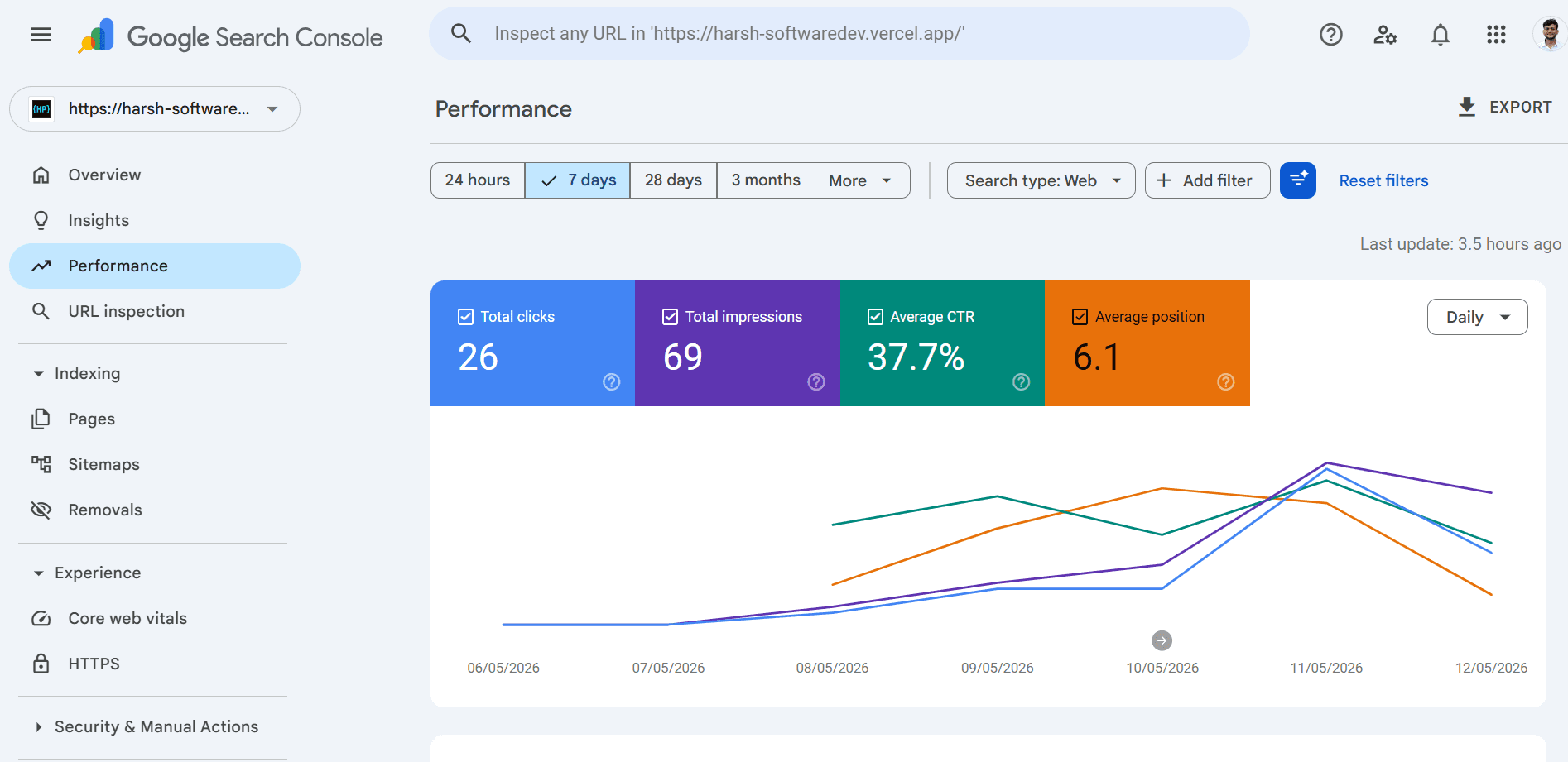
I opened Google Search Console after my first week of being indexed and saw 26 clicks, 69 impressions, a 37.7% CTR, and an average position of 6.1. Here's what each metric means, what the chart is telling me, and what I'm doing next.
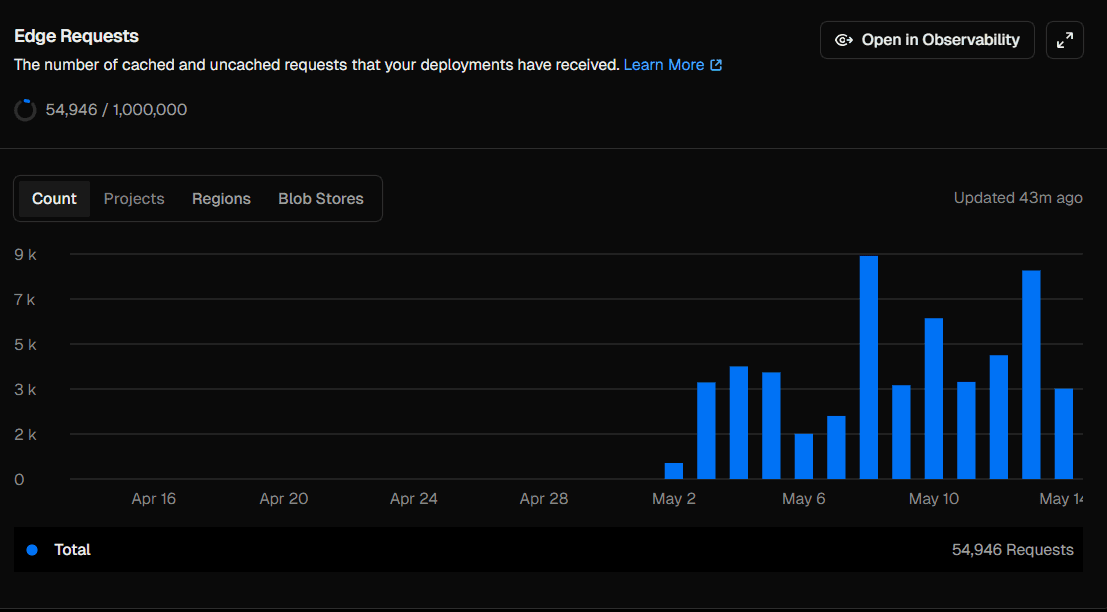
Vercel Edge Requests count every cached and uncached hit your deployment receives. My site hit 54,946 requests in two weeks — here's what that means, how to read the chart, and how to stay comfortably under the 1,000,000 free limit.
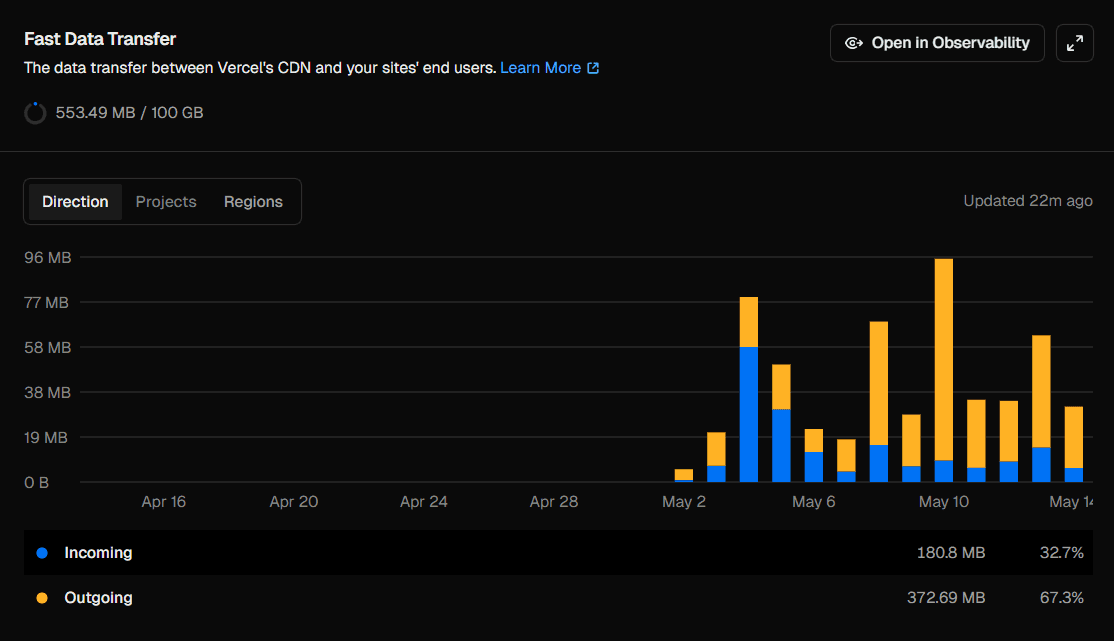
Vercel's Fast Data Transfer tracks bandwidth between their CDN and your actual users — not your server. I broke down my 553 MB of usage, explained the incoming vs outgoing split, and found ways to keep it under the 100 GB free limit.
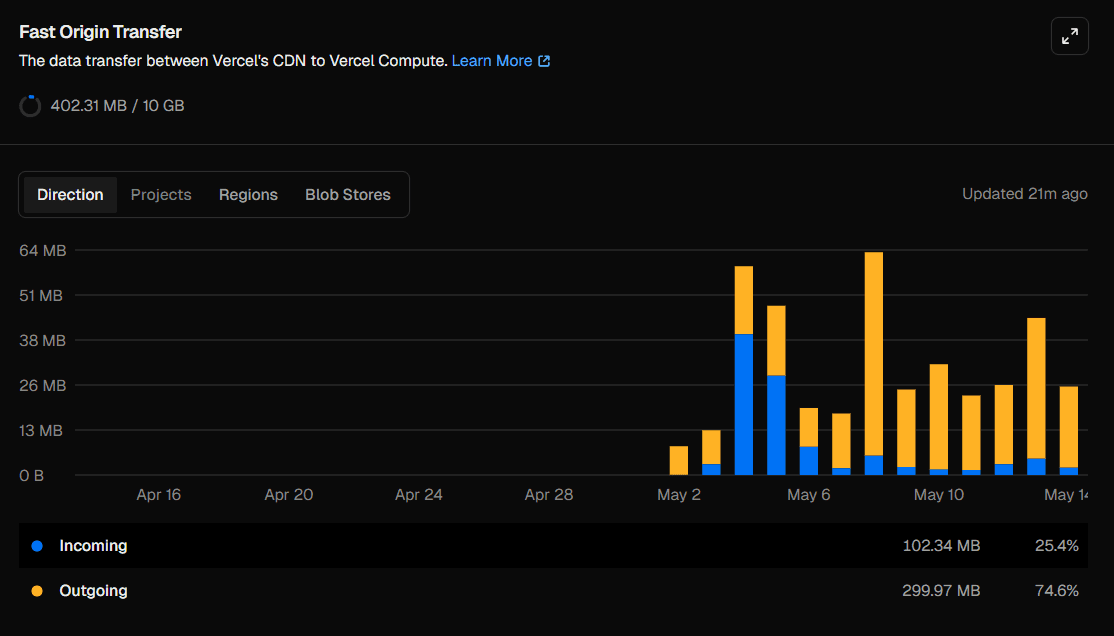
Noticed "Fast Origin Transfer" in your Vercel dashboard and wondered what it means? I broke down my own 402 MB of usage — incoming vs outgoing, what drives it, and how to keep it under the 10 GB free limit.
After building 10+ projects in 2026, I keep coming back to the same stack: Next.js App Router, Drizzle ORM, Neon Postgres, and Clerk Auth. Here's why, and how to set it up from scratch.
The Vercel AI SDK makes building streaming AI chat UIs surprisingly simple. In this tutorial you'll go from zero to a working chatbot with message history, streamed responses, and a clean UI.
Next.js middleware runs before every request at the edge. In this post, I show three real use cases — auth guards, A/B test routing, and country-based redirects — all in a single middleware.ts file.
Most Express tutorials stop at "Hello World". This one goes further — JWT auth, Zod validation, centralized error handling, and rate limiting so your API is actually ready for production.
React 19's useOptimistic hook lets you update the UI instantly while your async action runs in the background. Here's how to use it to build a like button, comment system, and todo list.
Both MySQL and PostgreSQL are battle-tested, but they're not interchangeable. I break down performance, JSON support, full-text search, and ecosystem to help you make the right call.
Slow Postgres queries are almost always an indexing problem. This guide covers B-Tree, GIN, partial, and composite indexes — with EXPLAIN ANALYZE breakdowns so you know exactly what to add.
Most Node.js developers load entire files into memory and wonder why their server crashes. Streams solve this. Here's how readable, writable, and transform streams actually work — with real examples.
Next.js 15 Server Actions let you handle form submissions directly in server components. This guide walks you through building a contact form that saves to a database — zero API routes needed.
I tested Claude 3.5, GPT-4o, and Gemini 1.5 Pro on real dev tasks — coding, debugging, and docs. Here's what actually surprised me, and which one I'm using daily.
A step-by-step walkthrough for pushing your Next.js project to GitHub and deploying it on Vercel with a custom subdomain — including environment variables, preview deployments, and production tips.
TypeScript is no longer optional in serious JavaScript projects. This post covers generics, utility types, discriminated unions, and the patterns I use daily as a full-stack developer.
Learn how to combine Supabase (managed PostgreSQL) with Prisma ORM to build type-safe, scalable backends inside a Next.js 14 project — with zero DevOps headaches.
Next.js 14 introduces the stable App Router with Server Components, streaming, and nested layouts. In this guide I walk you through everything from project setup to deploying on Vercel.